
About The Pontifical Mission Societies (TPMS)
The Pontifical Mission Societies (TPMS) are a worldwide network at the service of the Pope, supporting the missions and young Churches through prayer and charity. The four societies that comprise TPMS are:
- The Society of the Propagation of the Faith
- The Society of St. Peter the Apostle
- The Missionary Childhood Association (MCA)
- The Missionary Union
Since 1922, the first three of these societies have been designated as pontifical, underscoring their official role as instruments of the Pope and the universal Catholic Church. In most countries, a National Director oversees the four societies and manages the World Mission Sunday Collection, taken up in every Catholic parish worldwide on the second to last Sunday of October.
Our Mission
As the official missionary arm of the Catholic Church charged with the work of evangelization, The Pontifical Mission Societies USA seek prayer and sacrifice to support more than 1,100 territories throughout the world where the Catholic Church is too young, too poor, or is actively persecuted and cannot thus be self-sufficient.
Our Vision
To form and develop in every baptized person a missionary spirit – rooted in prayer, sacrifice, and charity – at the service of the Pope in his ministry of proclaiming the Gospel to those who do not know Christ.
Our Commitment
Help develop a missionary spirit in every Catholic community in the United States, rooted in the life of the parish, but in communion with the local bishop, Pope Francis, the Church’s top missionary, and mindful of the challenges of the universal Church.
Frequently Asked Questions
Who founded The Pontifical Mission Societies?
- Blessed Pauline Marie Jaricot (The Society for the Propagation of the Faith)
- Jeanne Bigard (The Society of St. Peter the Apostle)
- Bishop Charles de Forbin-Janson (The Missionary Childhood Association)
- Blessed Fr. Paolo Manna (The Missionary Union)
What do The Pontifical Mission Societies do?
Proclaiming the Gospel and evangelizing communities that have never encountered Christ.
Building churches and chapels as gathering places of faith and worship.
Supporting mission priests, religious Sisters and Brothers, and lay leaders who minister to the faithful.
Providing humanitarian aid, including food, education, and medical care to the most vulnerable.
Who Leads The Pontifical Mission Societies USA?
The Pontifical Mission Societies USA is guided by a National Director and a Board of episcopal and lay Catholic leaders. The Board advises on strategy, vision, and governance, ensuring the financial sustainability of the mission. Each member serves as an ambassador of TPMS in their dioceses and communities.
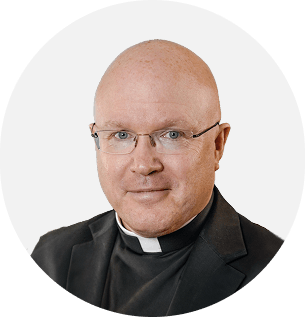
Appointed as National Director in September 2024 and officially assuming the role in January 2025, Monsignor Roger J. Landry brings a wealth of experience in evangelization, missionary outreach, and pastoral care.
A priest of the Diocese of Fall River, Massachusetts, Monsignor Landry has served in various capacities, including:
- Catholic Chaplain at Columbia University
- AttachĂ© to the Holy See’s Permanent Observer Mission to the United Nations
- Pastor and executive editor of a diocesan newspaper
- Missionary of Mercy, appointed by Pope Francis during the 2015 Extraordinary Jubilee of Mercy
In 2024, he undertook a 65-day Eucharistic pilgrimage across the United States as part of the Eucharistic Revival and the 10th National Eucharistic Congress, reinforcing his commitment to fostering missionary discipleship.
What is TPMS’ relationship with the Vatican and the Catholic Church?
The TPMS-USA is part of a global network known as The Pontifical Mission Societies, which includes similar organizations in 120 countries around the world, coordinated by the Vatican’s Dicastery for Evangelization, and presided over by the Pope himself!
TPMS-USA collaborates with the Vatican, missionaries, local communities, and dioceses to identify and support projects that address the specific needs of mission territories, such as catechesis, infrastructure, education, healthcare, and social development.
What types of projects do the Pontifical Mission Societies support?
Do The Pontifical Mission Societies only support international projects?
This is our primary mandate, to help the Church in 1,124 territories and dioceses around the world where the faith has yet to take root! However, we do have several mission animation projects in the United States, with invitations for prayer and activities for children so that they can grow in awareness of their brothers and sisters who are materially- and often spiritually, unable to regularly access the Sacraments- less fortunate.
How can I help or get involved with The Pontifical Mission Societies?
- Prayer. Pray for the success and safety of missionaries and the communities they serve.
- Donations. Your financial contributions make a tangible impact on the lives of people in mission territories. Every dollar counts!
- Spread Awareness. Share our mission with your friends, family, and community. Together, we can make a difference.
- Volunteer. Explore opportunities to actively engage in missionary activities and support projects for needy people.
Safeguarding
Upholding and Defending Human Dignity
At The Pontifical Mission Societies USA, we uphold the dignity of every person, especially the most vulnerable. Rooted in the Gospel and following the Pope’s call for a culture of care and accountability, we commit to creating safe environments in the places where we serve and support.
We recognize that missionaries often work in challenging contexts, including areas of extreme poverty, conflict, and instability. While TPMS USA does not oversee the governance of local mission territories, we support efforts that foster the protection of children and vulnerable adults in the communities we assist and demand that they follow the safeguarding policies established by the Vatican and their respective episcopal conferences or religious authorities. At a global level, in 2023, The Pontifical Mission Societies supported 2,701 projects destined to the education and protection of children.
Within our own organization, we maintain policies and best practices to ensure safe environments, expecting all those engaged in our mission—from staff to partners—to uphold the highest standards of respect and integrity.